
· by Michael Blair, Nashville's Lawn Care
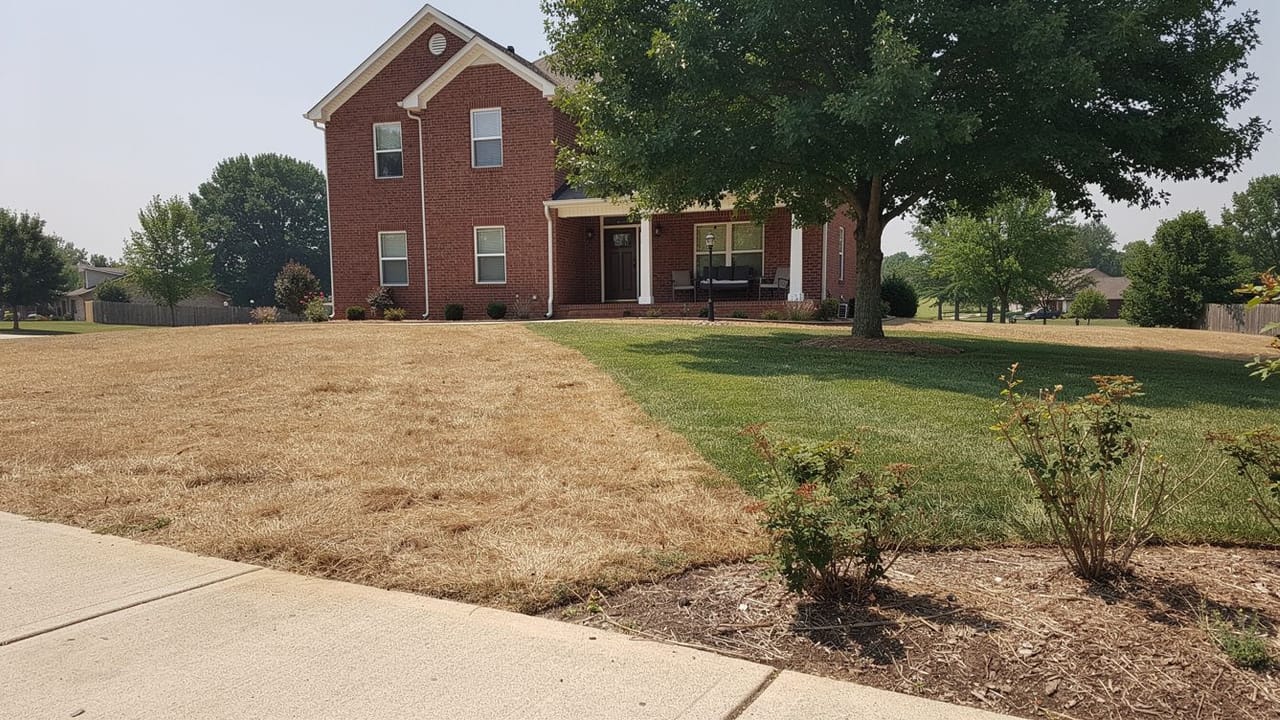
If your lawn is tall fescue, a brown July is usually less alarming than it looks. Clemson Extension’s tall fescue factsheet says cool-season grasses grow well in the cool months and may undergo stress, become dormant or be injured during the hot months of summer. That is the lawn we see on a lot of our routes every July. A fescue lawn that browns now is often doing exactly what fescue does in the heat, and the useful work is telling that apart from the few things that really are killing it.
Dormant is not dead
Through a long, dry hot spell you have two choices, as Clemson’s guide to watering lawns puts it: water to keep the grass green, or let it turn brown and dormant. The guide says a well-established fescue lawn can be allowed to go dormant without serious injury, while a newly established lawn with a limited root system may be severely injured or killed. That second half matters if your lawn was seeded last fall. Dormancy has a ceiling as well, since the University of Tennessee’s turfgrass extension site notes that fescues may die in summer when leaf temperatures reach 100 degrees Fahrenheit or more.
Before anyone decides the lawn is lost, we check it by hand in three or four spots. This is a field habit of ours, not an extension test. We tug a handful of brown blades, and where the plants hold firm in the soil we treat the lawn as dormant. Where they lift away with almost no root attached, something else has happened, and we keep looking.
Is it worth watering a dormant fescue lawn?
The water that gets wasted is the little-and-often kind. Clemson’s watering guide says never to water the grass every day except while a new lawn is establishing, because a small amount each day encourages a shallow root system and leaves the grass less drought tolerant. It also warns that encouraging the lawn to break dormancy and then not watering again will exhaust the plants and can cause injury. Pick green or pick dormant, then stay with the choice. Short evening cycles carry a second cost: Clemson’s brown patch factsheet says that disease can spread fast with more than 10 hours of continuous leaf wetness.
If you want the lawn green through July, the brown patch factsheet puts it at generally 1 inch of irrigation water a week, enough to wet the soil 4 to 6 inches deep, applied early in the morning. Let the grass tell you when. Clemson’s watering guide lists a bluish-gray cast, footprints that stay visible late in the day, and leaves that wilt, roll or fold. Once those show, the guide calls for about half an inch of water on coarse, sandy soil and 1 inch on heavy or fine-textured soil, and then no more until the symptoms come back.
When brown is actually a problem
Brown patch reads differently from heat. Clemson’s brown patch factsheet calls it the most common and important disease of tall fescue in the Southeast. It describes thinned, roughly circular patches of light brown grass, from a few inches to several feet across, often with a smoky brown edge where the fungus is active that may show up best in the early morning. Up close, the blades carry small, irregular tan spots with dark-brown borders. We go further into it in our post on brown patch in Nashville fescue.
Grubs leave a third kind of brown. UT’s turfgrass site notes that white grubs, the larvae of scarab beetles, feed on roots, and NC State Extension’s white grub factsheet puts their feeding near the soil surface from August through October and again from April through early May. When we suspect them, we pull at the turf along the edge of a dead spot and dig a little for the cream-colored, C-shaped larvae NC State describes. One more rule of thumb from our own yards: heat dormancy tends to spread across the sunny, dry parts of a lawn, so brown patches sitting inside green grass send us looking for disease or insects first. That is the work our grub, disease and pest control service starts with.
What should I do for a brown lawn in August?
Raise the mowing height and cut less often. Clemson’s mowing factsheet gives tall fescue 3 to 3.5 inches in summer, says turfgrass under heat or drought stress should be mowed at a higher level of cut, and says to remove no more than one-third of the grass height at any one mowing. Avoid scalping. The same factsheet warns that taking off more than a third at once can stop the roots from growing and would require frequent watering during dry summers to keep the plants alive. There is more on setting the deck for summer in our guide to how short to cut grass.
Then wait for cooler weather. UT’s turfgrass site says fescues grow best from 60 to 75 degrees and calls late August to mid-October an ideal time to plant seed of cool-season grasses, which is when we schedule core aeration and overseeding. Feeding runs on the same calendar: Clemson’s fertilizing guide schedules tall fescue in the Piedmont and mountains for February, September and November, with nothing from April through August. We treat August as the month to protect what is there and the fall as the time to rebuild it. If you would like a crew to look at a brown lawn before then, ask us for a free estimate.
Sources
- Clemson Cooperative Extension, HGIC 1210 Tall Fescue (updated 2024) — Cool-season grasses grow well in cool months and may undergo stress, go dormant or be injured in summer; may need significantly more water than warm-season grasses; tall fescue green in winter when warm-season grasses are dormant and brown
- Clemson Cooperative Extension, HGIC 1207 Watering Lawns (2019) — Water to keep green or let the lawn go dormant; established fescue can go dormant without serious injury, new lawns may be killed; never water daily except during establishment; breaking dormancy and then stopping exhausts the plants; signs of drought stress; half an inch on sandy soil, 1 inch on heavy soil
- University of Tennessee Institute of Agriculture, Turfgrass Extension — Fescues may die when leaf temperatures reach 100 °F; white grubs feed on roots; fescues grow best from 60 to 75 °F and late August to mid-October is ideal for seeding; bermudagrass dormant and prone to low temperature injury in winter
- Clemson Cooperative Extension, HGIC 2150 Brown Patch & Large Patch Diseases of Lawns (updated 2025) — Most common disease of tall fescue in the Southeast; circular patches with a smoky brown edge, more apparent in the early morning; leaf spots; spread with more than 10 hours of leaf wetness; about 1 inch of water a week, early morning; avoid high nitrogen in late spring and summer
- NC State Extension, White Grubs in Turf (revised 2022) — Grubs feed near the surface from August through October and again in April through early May; cream-colored, C-shaped larvae
- Clemson Cooperative Extension, HGIC 1205 Mowing Lawns — Tall fescue 3 to 3.5 inches in summer; mow stressed turf higher; remove no more than one-third at a mowing; cutting more can stop root growth
- Clemson Cooperative Extension, HGIC 1201 Fertilizing Lawns (2019) — Piedmont and mountain schedule for tall fescue: feedings in February, September and November, none from April through August
FAQ
Why Your Nashville Lawn Goes Brown Every July — questions
How long can fescue stay dormant before it dies?
There is no fixed number of weeks we can promise. Clemson Extension says a well-established fescue lawn can go dormant without serious injury, while a fescue lawn only a few months old with a limited root system can be severely thinned or killed, and UT notes that fescue may die when leaf temperatures reach 100 degrees or more. If you start watering a dormant lawn and it greens up, keep going, because Clemson warns that waking it and then stopping can exhaust the plants.
Should I fertilize a brown lawn in summer?
No. Clemson’s brown patch factsheet says to avoid high rates of nitrogen on cool-season grasses in late spring and summer, because the fungus readily attacks the lush growth that nitrogen promotes. Clemson’s fertilizing schedule for tall fescue in the Piedmont and mountains has feedings in February, September and November and none from April through August. We hold the fertilizer until the weather cools.
Would bermuda be better for a Nashville lawn?
It depends on what you want from the yard. Bermuda is a warm-season grass, and Clemson notes that cool-season grasses like fescue may need significantly more water than warm-season grasses through the hot months. The trade comes in winter: UT lists bermudagrass among the grasses that are dormant and prone to low temperature injury in winter, and Clemson points out that tall fescue keeps its green color while the warm-season grasses are dormant and brown. Shade is the other question, and we look at that yard by yard.
When grass turns brown, is it dead?
Often not, in a fescue lawn in July. Brown established fescue is most often heat-dormant, and Clemson says it can stay that way without serious injury. To check, tug a handful of brown blades in a few spots: plants that hold firm are dormant, while ones that lift away with almost no root point to another problem.