
Lawn Care · Nashville, TN
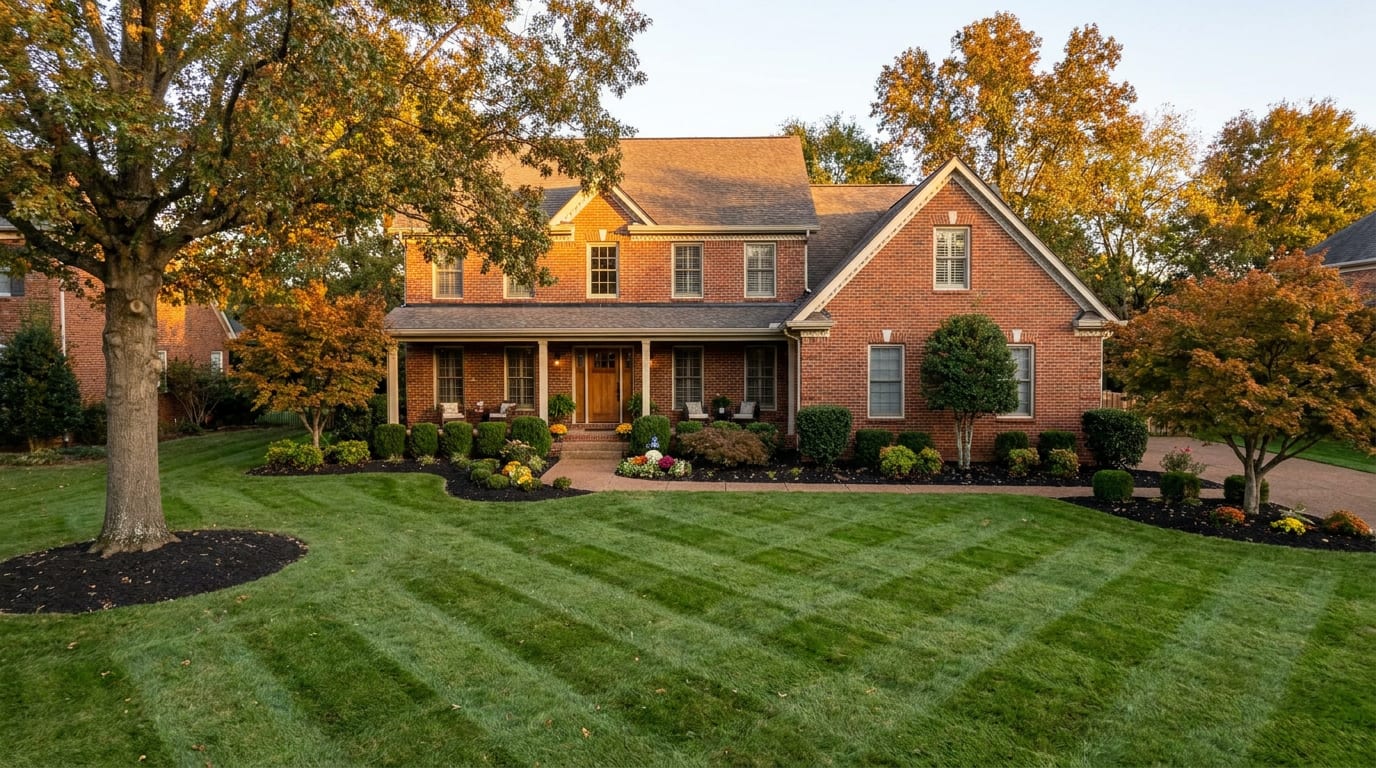
Lawn care in Nashville, on the same day every week
Weekly mowing, fertilization, weed control and seasonal cleanups from Nashville crews who turn up on the day they said they would.
Estimate request
How big is the lawn, and what is wrong with it?
Straight to us, and a reply the same day.
Nashville's Lawn Care
Nashville's Lawn Care is a lawn care company based in Nashville, Tennessee, working 65 towns across 12 counties of Middle Tennessee. Lawn care that turns up on the day it said, cuts at the right height, and treats the weeds that actually grow here.
More about who we are, what we commit to, and who answers for this site.
What we fix
Weeds, bare patches and the July brownout
Recognize one? You are in the right place.
- Grass growing faster than you can cut it
- Crabgrass and weeds taking over
- Bare or patchy spots
- Lawn browns out every July
- Leaves smothering the grass
- No time at weekends
Services
Mowing, feeding and fixing Nashville lawns
Everything we handle, and what each one actually covers.
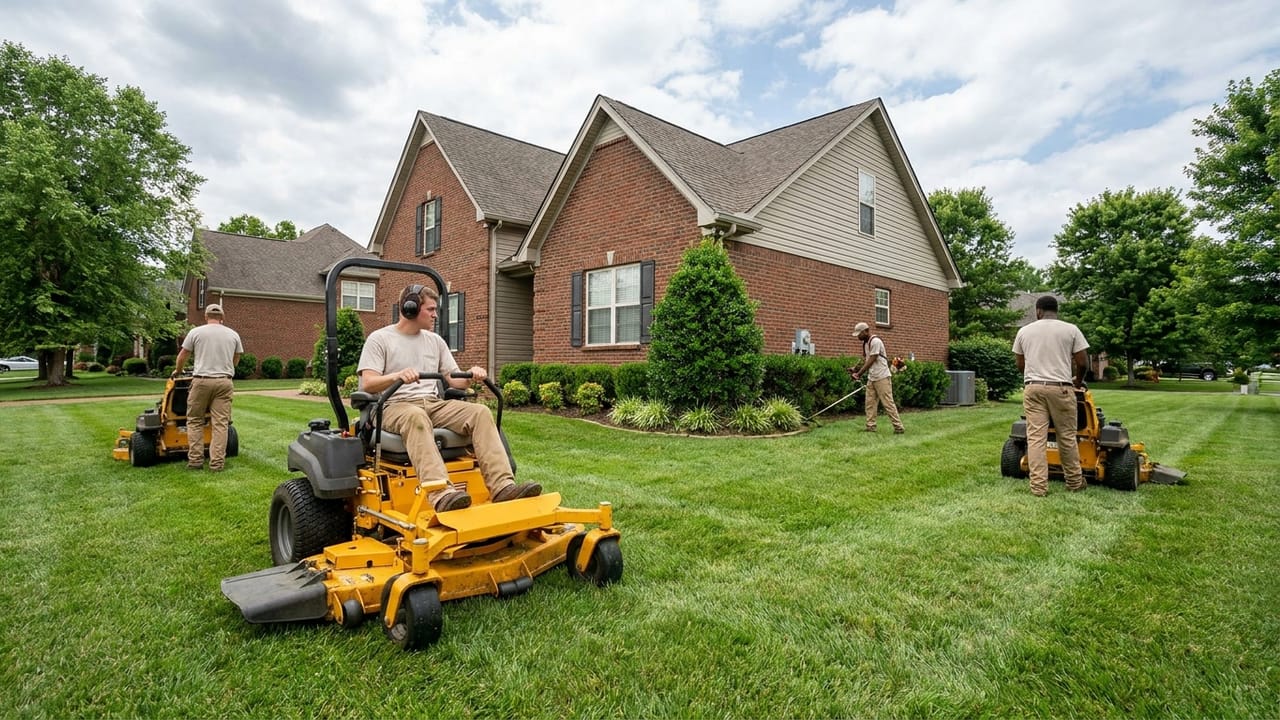
Weekly Lawn Mowing
Mowing, edging, trimming and blow-down on a fixed weekly or biweekly schedule, with the same crew each visit.
Learn more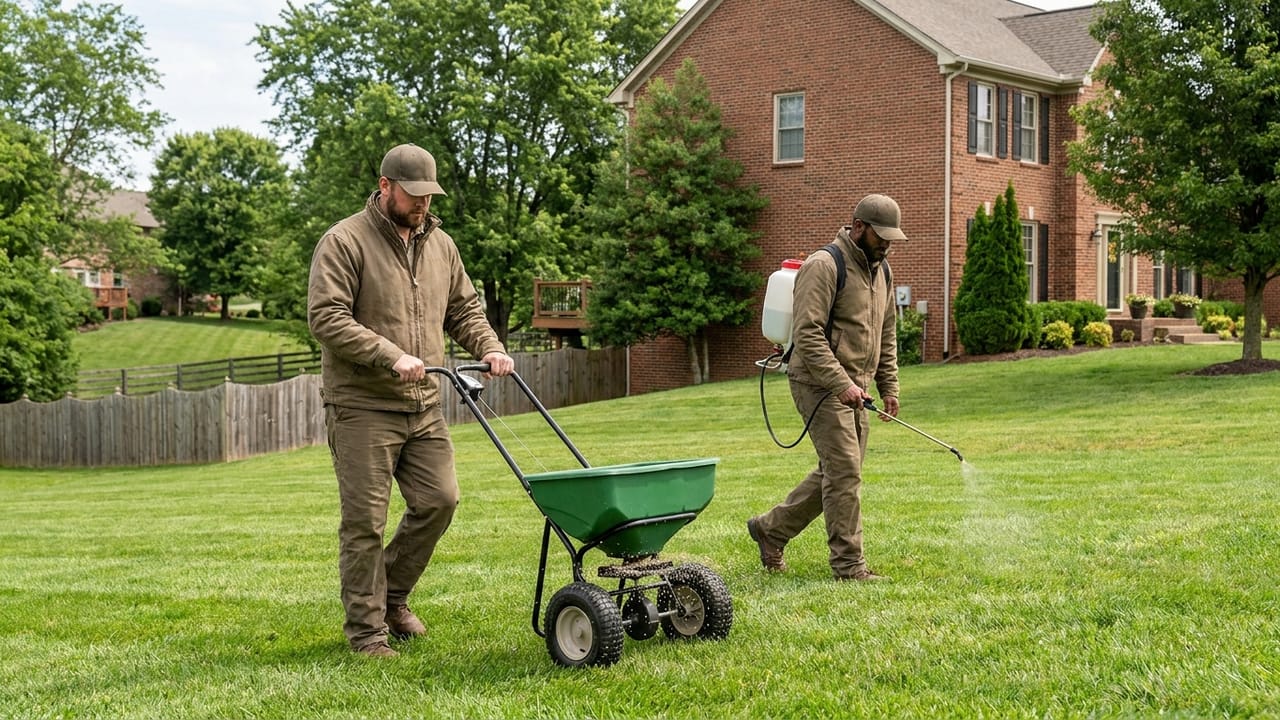
Fertilization & Weed Control
Season-long programs built for Middle Tennessee fescue and bermuda, including pre-emergent timing that actually stops crabgrass.
Learn more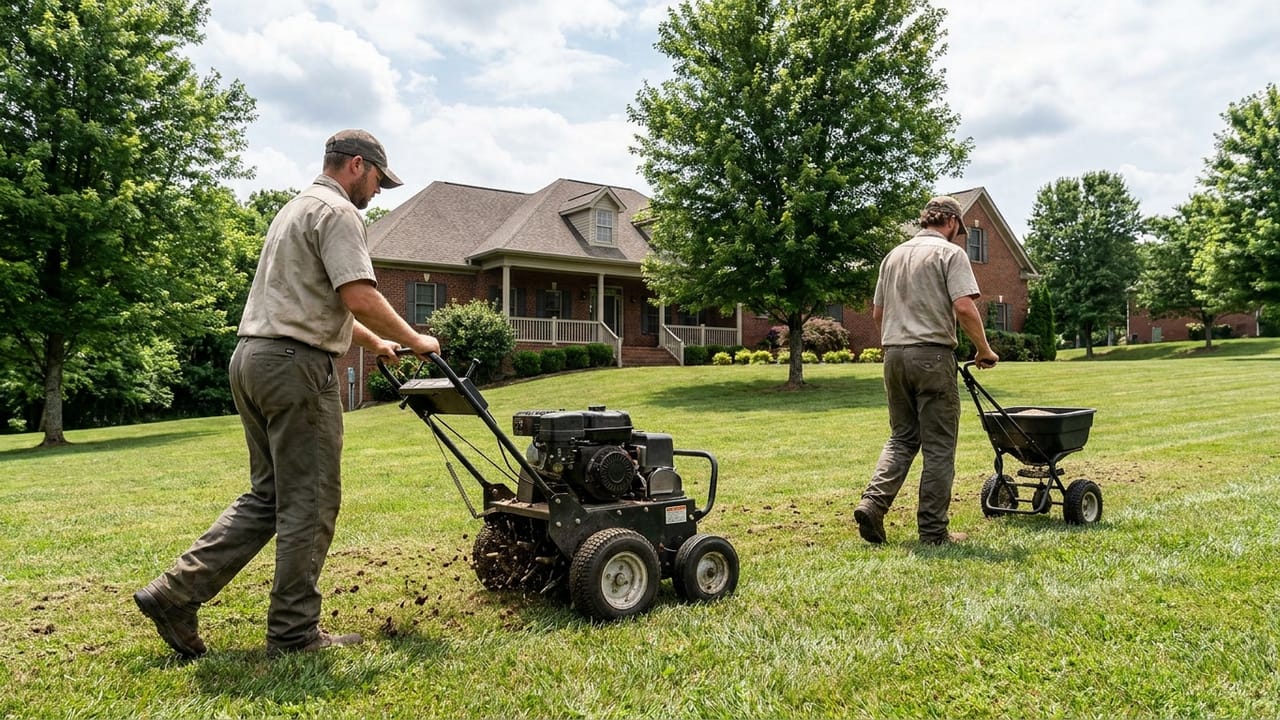
Aeration & Overseeding
Core aeration and overseeding in early autumn, which is the single best thing you can do for a fescue lawn in this region.
Learn more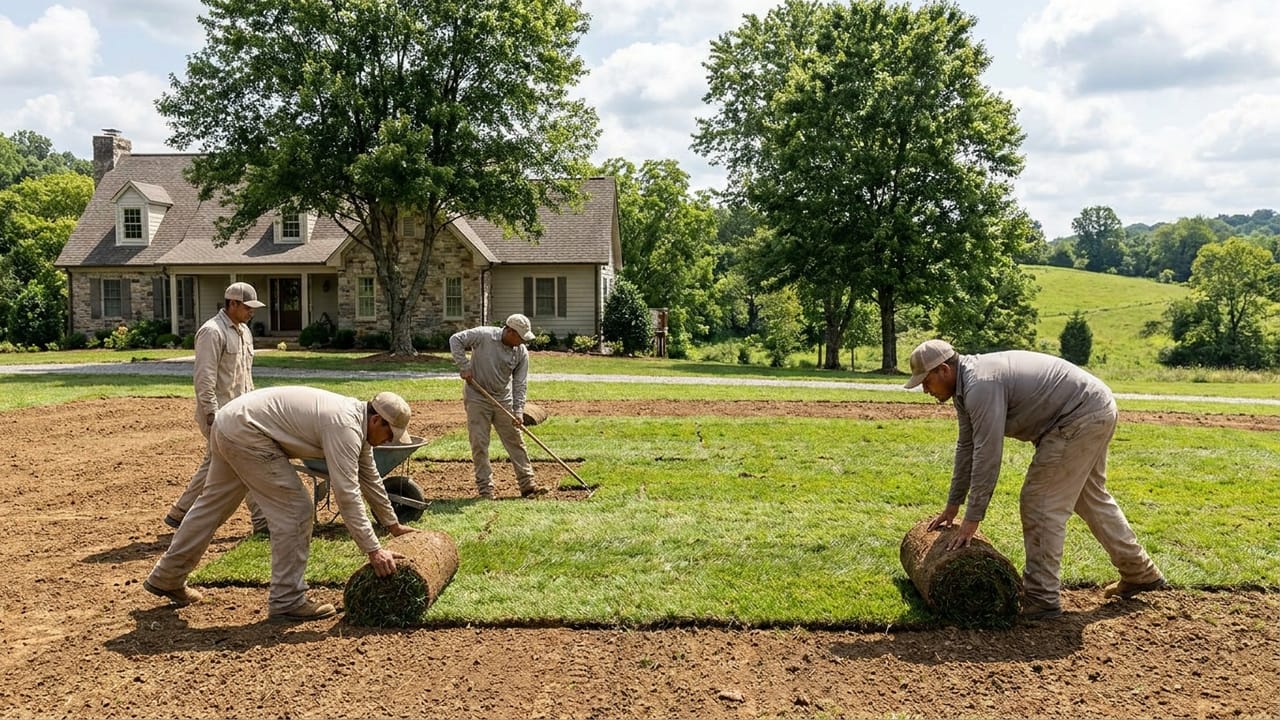
Sod & Lawn Renovation
New sod, seeding and full renovation for lawns that have gone too far for a maintenance program to bring back.
Learn more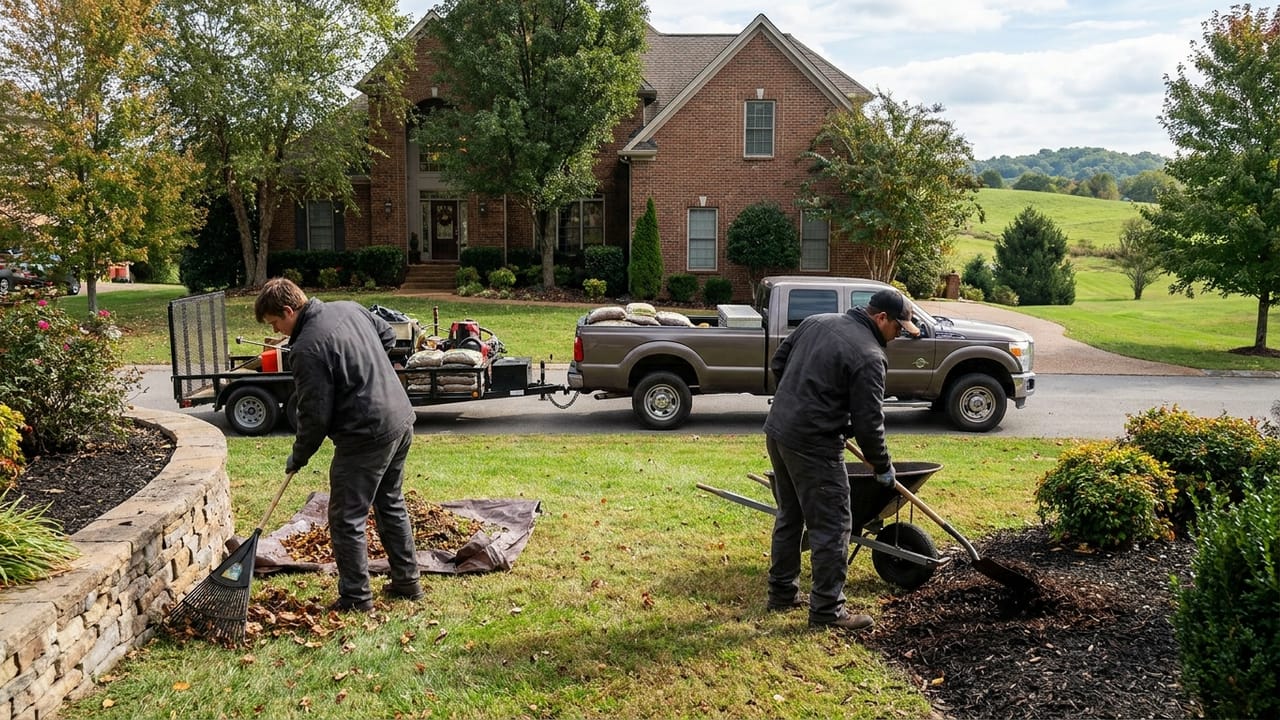
Cleanups & Mulch
Spring and fall cleanups, leaf removal, mulch and pine straw refresh, and storm debris clearing.
Learn more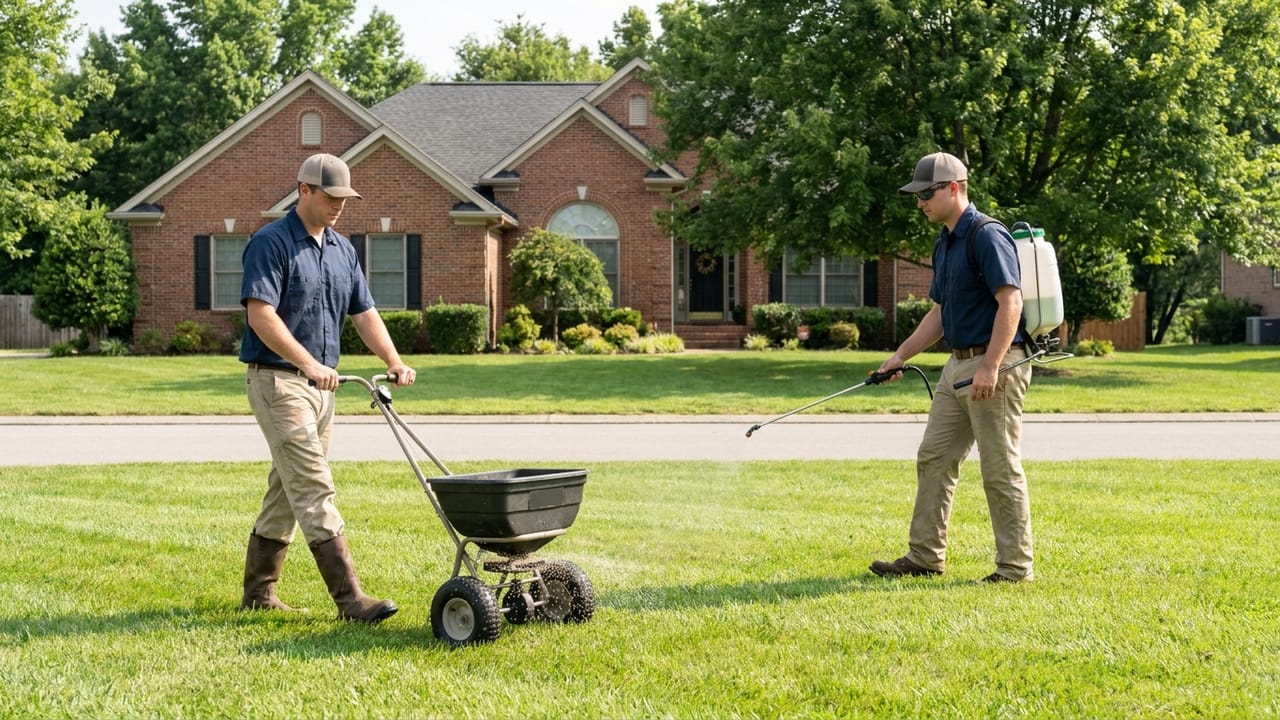
Grub, Disease & Pest Control
Grub treatment and brown patch control timed to when Middle Tennessee lawns actually get hit rather than by the calendar.
Learn moreHow it works
From the first walk-around to a set mowing day
Tell us what is happening
Send the form; describe it in your own words.
Get a free written estimate
One of our lawn care companies looks at the work and gives you a scope and a price in writing, with no obligation to go ahead.
We do the work
Agreed price, tidy site, workmanship in writing. Not right afterwards? We come back.
Why trust us
How our crews treat your grass, your beds and your day
There are no testimonials on this site yet, on purpose — a lawn company this new quoting happy customers would be quoting somebody else’s, and we would rather show you a clean edge than a borrowed star.
-
Hold the day
Your lawn is on a fixed route; if weather moves it, you hear before the crew does not arrive.
-
Cut for the grass you have
Fescue at three and a half inches in summer, Bermuda short and often; the height is set by the turf, not by how fast the crew wants to finish.
-
Price the season up front
One number for the mowing season, one for treatments, before the first visit.
-
Mow wet
It rutts the yard and spreads disease; a rain day is a moved day, not a ruined lawn.
-
Spray what will not work
A pre-emergent in June is money burned; the treatment calendar follows the weeds, not the invoice cycle.
-
Lock you into a year
Month to month, cancel with a call; a service that needs a contract to keep customers has answered the question.
Middle Tennessee
Fescue, Bermuda and clay: why lawns here behave differently
Middle Tennessee sits in the transition zone, which is the hardest place in the country to grow grass. It is too hot in July for cool-season fescue and too cold in January for warm-season bermuda, so every lawn here is a compromise and the calendar matters more than the product. Fescue needs to be overseeded every autumn because it will thin in the summer no matter what you do; bermuda needs to be cut low and fed hard in June and left alone in November.
The other regional factor is the soil. Much of Davidson, Williamson and Rutherford County sits on shallow topsoil over limestone and clay, which drains badly in spring, bakes hard in August, and compacts under mowers and foot traffic. That is why core aeration is not an upsell here — it is the difference between water reaching the root zone and running off it.
Service area
Lawn routes across Middle Tennessee
Our mowing routes reach 12 counties: Nashville itself and 64 more towns around it. A yard anywhere in Middle Tennessee, roughly an hour from Nashville or closer, fits inside our range.
FAQ
What people ask before they sign up for mowing
How much does lawn care cost in Nashville?
A Nashville lawn is priced by the square footage that actually gets cut, the slope, the edging, and how many obstacles the mower has to steer around — not by the size of the house.
How fast can you get someone out?
A first cut in Nashville is usually scheduled inside the week; in April, when every lawn in the region wakes up at once, it can run to two, and we say which.
What areas do you cover?
The Nashville route continues through Franklin, Brentwood, Murfreesboro, Hendersonville; in all, 65 towns across 12 counties are cut on fixed days.
Are you licensed and insured?
A crew is not sent until we have its insurance certificate on file and, for anyone treating a lawn, the Tennessee applicator license the state requires for commercial spraying.
Do you charge for an estimate?
No — free, written, and no obligation.
What if something goes wrong afterwards?
Send the form; the workmanship is backed in writing.
How do I get rid of crabgrass?
Prevent it rather than fight it: a pre-emergent applied in early spring, before soil temperatures reach about 55°F for several consecutive days, stops it germinating. Once crabgrass is visible it takes a post-emergent and it will not look tidy quickly. The longer answer is that crabgrass fills thin turf — a dense, properly fertilized lawn mown high crowds it out without chemicals.
Why does my lawn go brown every July?
If it is fescue, that is dormancy rather than death — cool-season grass shuts down in Middle Tennessee summer heat and greens back up in autumn. Bermuda and zoysia thrive in the same heat and go brown in winter instead. Brown patches that spread in a circular pattern during humid weather are brown patch fungus, which is a disease and does need treating.
How often should a lawn be mowed and how short?
Weekly through the growing season, and higher than most people cut. Never remove more than a third of the blade at once. Fescue should be kept around three to four inches — tall grass shades the soil, holds moisture and suppresses weeds, and scalping a lawn in June is the fastest way to lose it to crabgrass and heat.
When should I overseed a lawn in Tennessee?
Early autumn, roughly September into mid-October. Soil is still warm enough to germinate, nights are cooling, and the new grass gets established before winter without competing against summer weeds. Spring seeding works far less well here because the seedlings hit summer heat before their roots are deep enough, and pre-emergent for crabgrass will also stop grass seed germinating.
What does lawn care pricing depend on?
Lot size, terrain and what is included. Mowing is priced on area and obstacles — slopes, trees, beds and gates all slow a crew down. Treatment programs are priced per application and per thousand square feet. The distinction that matters is between mowing alone and a program that includes fertilization, weed control, aeration and overseeding, because the second is what actually changes how the lawn looks.
Free estimate
Ready to hand the mower over?
Give Nashville's Lawn Care the address and a word on what the grass is doing; the reply is a written estimate at no charge, with no commitment attached.