
· by Michael Blair, Nashville's Lawn Care
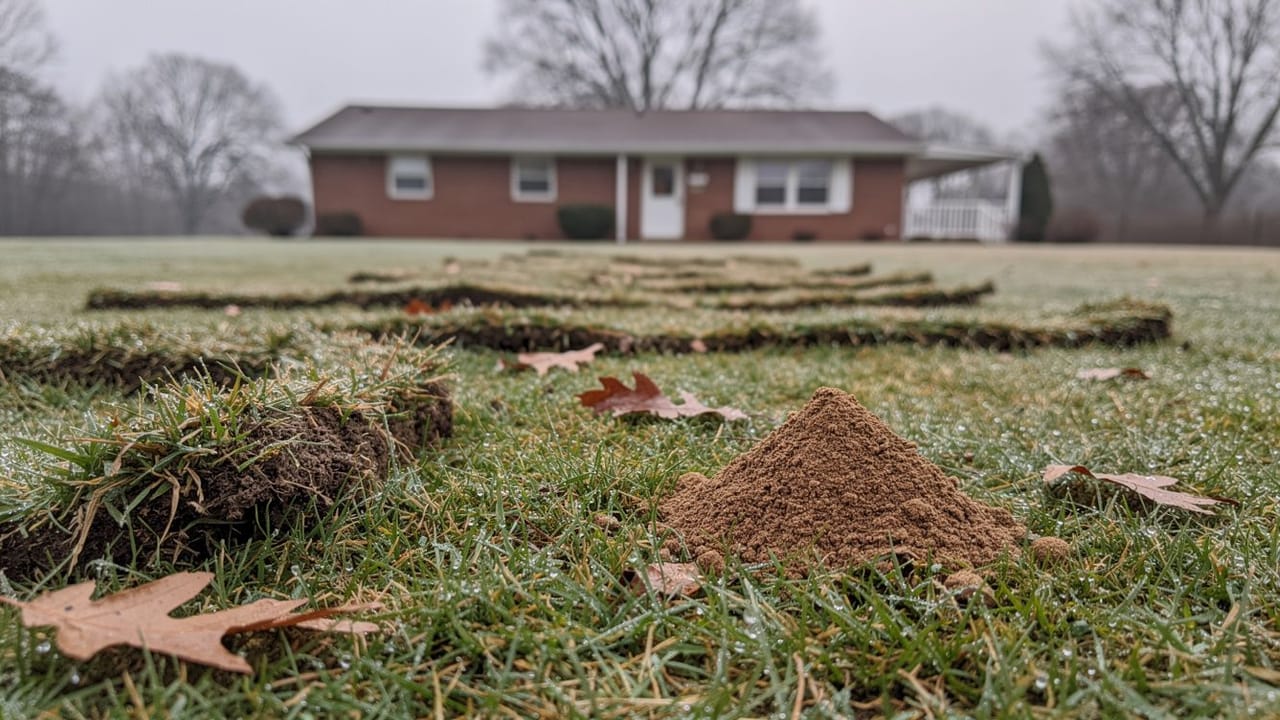
A wet November in Middle Tennessee brings a familiar complaint: soft, raised lines wandering across a fescue lawn that looked fine a week ago, sometimes with a small mound of loose soil at one end. That is a mole, and the most common advice about it, to treat the lawn for grubs, is the advice extension specialists most often warn against. Here is how to tell a mole from a vole, what moles actually eat, when they tunnel, and what the lawn needs once they have been through it.
Is it a mole or a vole tearing up the lawn?
Raised ridges of soil mean a mole, because no other animal leaves them. University of Missouri Extension’s guide to controlling nuisance moles says those surface tunnels are unique to moles, and that the cone-shaped mounds pushed up from their deeper runs usually hold coarse soil and clods. The University of Tennessee’s Tennessee Lawn and Landscape Guide names the eastern mole as the one behind mole damage in Middle Tennessee, and says any harm to plants comes from the tunneling itself.
Voles are a different animal with a different appetite. The same UT guide calls the pine vole and the meadow vole, the two found here, vegetarians that feed on roots, bulbs and rhizomes and gnaw the bark of small trees. They travel in runs through tall grass and thick mulch rather than lifting ridges in open lawn. A lawn with raised, spongy lines is a mole problem; plants chewed at the roots or bark gnawed near the ground in a mulched bed point to voles.
Why doesn’t treating for grubs get rid of moles?
Treating for grubs usually fails because grubs are not what most moles live on. Iowa State University’s Yard and Garden guide to moles in the lawn says the main mole meal is earthworms, filled out with insect larvae, centipedes, millipedes and spiders, and that white grub insecticides do not control earthworms. Its authors single out the promise that an insecticide will cure moles as the worst mistake made in the name of mole control.
Missouri’s guide is a little more forgiving. Grubs are a preferred food, it says, but even a grub-free lawn can hold moles when other food is there, and only where nothing else is available does grub control drive them off. It adds a catch: a mole losing its food supply may dig more while it searches, before it leaves. So we treat for grubs when a lawn has grubs, at the time of year that works against grubs, as Iowa State advises, and never as a mole remedy.
When are moles most active in Middle Tennessee lawns?
Moles are active all year, but they work near the surface in moist spring and fall weather, which is why ridges appear after a wet stretch in November. Iowa State says surface activity happens in early morning and late afternoon in spring and fall, and on cloudy, damp summer days; the rest of the year moles keep to deep tunnels 6 to 24 inches down. Missouri describes the same split: shallow tunnels for spring, summer and fall, deep permanent ones for winter, with burrowing at its peak in warm, wet months.
Soil matters too. Missouri says moles prefer moist, sandy loam and generally avoid heavy, dry clay. On Middle Tennessee clay, that puts the watered lawn, the low spot that stays damp and the shady edge along a bed at the top of the list, and it fits the pattern of a lawn that stays clear through a dry summer and shows ridges after fall rain. Iowa State also notes that moles are mostly solitary, at roughly three to an acre, so a yard that looks overrun may be the work of very few.
What works on moles, and what we do for the lawn
Trapping is the control the extension services agree on. The UT guide calls it the surest option for moles in lawns. Missouri calls it the most successful and practical method, set in a straight, freshly worked surface runway rather than on a mound, and moved if it catches nothing in two days. Iowa State lists sonic and electromagnetic devices, chewing gum and grain-based poison baits among the things that do not work, and says early results with castor oil repellents have not held up in further testing.
Our part is the turf. Iowa State explains that lifted sod dries out and the grass on top of it dies, and that mowers scalp the ridges, so we press the ridges back down while the soil is soft. Missouri adds that packing the soil with a roller can make an area less inviting to moles. Strips that have already died wait for the next good seeding window, which our post on when to overseed a fescue lawn covers.
Grub treatment stays where it belongs, on our grub, disease and pest control page, timed to the grubs themselves. If ridges have spread across a lawn in Brentwood or anywhere nearby, ask us for an estimate on the repair.
Sources
- University of Missouri Extension, G9440 Controlling Nuisance Moles — Surface ridges unique to moles; prefer moist sandy loam, avoid heavy dry clay; shallow tunnels spring to fall, deep tunnels in winter; grub control and moles; repellents; trapping the most successful method
- Iowa State University Extension, Yard and Garden: Moles in the Lawn, Control — Earthworms the main food; grub insecticides do not control earthworms; about three moles per acre; surface activity in spring and fall; controls that do not work
- University of Tennessee, Tennessee Lawn and Landscape Guide: Moles, Voles and Critters Who Dig Holes — Eastern mole causes mole damage in Middle Tennessee; voles are vegetarians; trapping the surest option
FAQ
Moles in a Nashville Lawn: Why Grub Control Fails — questions
Do moles eat the roots of grass?
Rarely. Missouri Extension says moles seldom eat bulbs, ornamentals or other plant material; they eat earthworms, grubs and other soil animals. The grass dies because tunneling lifts the sod away from the soil and the roots dry out, as Iowa State also describes. Plants chewed at the roots point to voles, which are vegetarians.
Will castor oil repellent keep moles out of a yard?
Not reliably. Missouri Extension says castor oil repellents may prevent eastern mole damage under certain circumstances but have limitations and may not stop it. Iowa State says early, encouraging results with castor oil have not held up in further testing. Both point to trapping in an active surface runway as the dependable method.
Do sonic mole spikes work?
No. Iowa State’s Yard and Garden guide lists sonic, ultrasonic and electromagnetic devices among the mole controls that do not work, alongside chewing gum and grain or peanut poisons. Moles follow food and soil moisture, and a device in the ground changes neither. Trapping is the method Missouri Extension, Iowa State and UT all name instead.
How many moles are usually in one yard?
Fewer than it looks. Iowa State says moles are mostly solitary and puts a typical population at about three per acre. Missouri notes that some tunnels are dug once and abandoned, so a single mole can ridge a lot of lawn, and the UT guide points out that every mole trapped is one that will not disturb the lawn again.