
· by Michael Blair, Nashville's Lawn Care
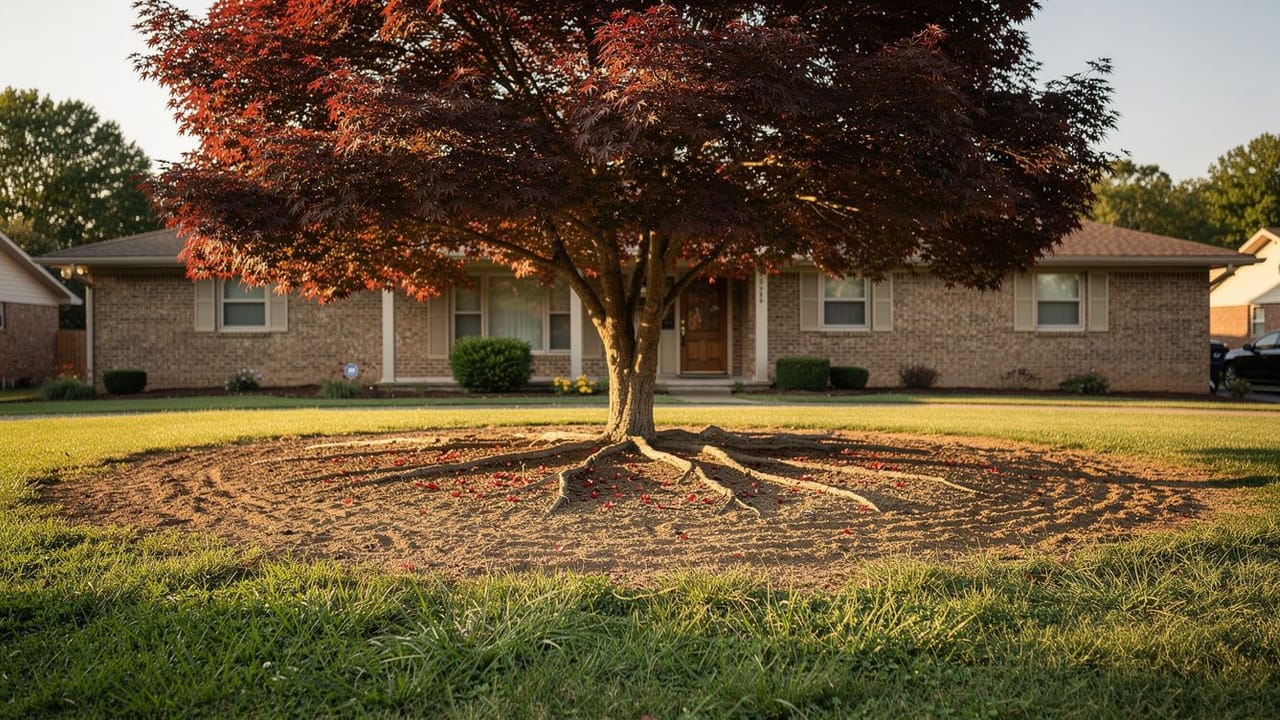
Bare ground under a mature tree is one of the hardest parts of a Nashville lawn to keep covered, and a lot of the seed spread there every year is wasted. The seed is rarely the problem. Light, water and root competition are, usually all three at once, and seeding by itself does nothing about any of them.
It is water before it is light
A mature maple or oak has its roots in the same soil the grass is trying to root into. Penn State Extension’s guide to mulching landscape trees names grass among the plants that compete with tree roots for water and nutrients, and grass seeded into that zone is up against a root system far larger than its own.
How much larger is the reason a bare patch can run past the shade line. Clemson Extension’s mulch fact sheet notes that a tree’s root system can extend two to three times the spread of its crown, so the competition for water does not stop where the shadow does. When the thin grass keeps going beyond the edge of the canopy’s shadow, light alone is not the explanation.
What helps grass grow under trees?
Crown thinning by a professional arborist lets more light reach the ground without harming the tree. Clemson’s guide to pruning trees says pruning can increase sunlight and air circulation, prefers thinning cuts to heading cuts, and calls opening up a crown a specialized job best done by an arborist; it also warns that cutting every branch back to an arbitrary length, the practice it calls hat-racking, often kills the tree. While the arborist is there, ask whether taking off a few of the lowest limbs would let low morning or evening light in under the canopy. On some trees it helps, and on others it changes little.
Then pick the most shade-tolerant fescue you can find. Clemson’s tall fescue fact sheet says the turf-type tall fescues have more shade tolerance than the old K-31, and it adds the limit worth knowing before you buy seed: turfgrasses need at least four hours of direct sunlight a day. Seed in early fall rather than spring. Virginia Cooperative Extension’s summer watering guide puts the ideal time to establish cool-season grasses in late summer to early fall, with spring as the second choice. That window is when we schedule aeration and overseeding, and our post on when to overseed a fescue lawn in Nashville works through the calendar.
Water that zone on its own schedule. Because the roots are drawing on the same soil, the ground under a tree can be drier than the open lawn, and a single schedule for the whole yard can leave that strip short. When it is dry, water deeply; the Virginia guide recommends soaking the root zone to about 4 inches and doing it less often, since light, frequent watering grows shallow roots. Mowing toward the top of the recommended height helps too, and the same publication says the taller grass shades the soil and cuts evaporation. The mowing heights we use for fescue through a Nashville summer are in our post on cutting height.
- Thin the crown; never cut every branch back to a stub
- Ask whether raising the canopy would let in low light
- Seed in early fall, not spring
- Water that zone on its own schedule, deeply and less often
- Keep mowing height at the top of the range there
When should I give up on grass under a tree?
Under a dense evergreen, or where a big tree’s roots run along the surface, there may never be four hours of sun or enough water left over for turf. Reseeding there every year is paying for the same result again. University of Maryland Extension’s advice on mulching trees and shrubs is to mulch the area under a tree instead of planting grass, because that reduces the competition for nutrients and moisture.
A mulch ring is the honest answer, and it is better for the tree than turf is. Maryland’s page adds that mulch conserves soil moisture and protects the trunk from lawnmowers and weed trimmers. On depth the extension services differ a little: Maryland says one to three inches, Penn State 2 to 4 and no more, so we stay around 2 to 3. Penn State also has you pull mulch 8 to 10 inches back from the trunk of a mature tree so the root flare shows, and it calls a volcano of mulch piled against the bark a practice that is never recommended. Clemson suggests carrying the ring 6 to 12 inches past the drip line where the yard allows. Laying and refreshing those rings is part of our cleanup and mulch work.
Planting instead of seeding
Where a ring is not wanted, a shade-tolerant ground cover can fill the space grass will not. Clemson’s liriope fact sheet calls liriope remarkably tough, suggests it as a ground cover under trees, and says it grows in deep shade or full sun and in sand or clay, though it will not take wet feet. Clemson’s ajuga fact sheet says ajuga grows faster in partial shade and suggests planting it on banks or under trees, where its spreading habit is welcome.
Plan on watering anything new through its first dry spells. The same competition that beats the grass makes the first year under a tree hard for any plant, and Clemson’s advice even for established liriope is to water weekly as needed in a summer drought. If you would like us to look at the bare ground under your trees and tell you whether it is a seeding job, a mulch ring or a planting bed, ask us for a free estimate.
Sources
- Penn State Extension, Mulching Landscape Trees — Grass competes with tree roots for water and nutrients; 2 to 4 inches and no more; pull mulch 8 to 10 inches from mature trunks; volcano mulching never recommended; roots need oxygen; buried root flares
- Clemson Cooperative Extension, HGIC 1604: Mulch — Root systems can extend two to three times the crown spread; mulch 6 to 12 inches beyond the drip line
- Clemson Cooperative Extension, HGIC 1003: Principles & Practices for Pruning Trees — Pruning increases sunlight; thinning preferred over heading; opening the crown is arborist work; hat-racking often kills the tree
- Clemson Cooperative Extension, HGIC 1210: Tall Fescue — Turf-type tall fescues more shade tolerant than K-31; turfgrasses need at least four hours of direct sun; fine fescue shade and wear ratings
- Virginia Cooperative Extension, 430-010: Summer Lawn Management: Watering the Lawn — Cool-season grasses best established late summer to early fall; deep, infrequent watering to 4 inches; taller mowing shades the soil
- University of Maryland Extension, Mulching Trees and Shrubs — Mulch under trees instead of grass to reduce competition; conserves moisture; protects from mowers and trimmers; one to three inches
- Clemson Cooperative Extension, HGIC 1108: Liriope — Ground cover under trees; deep shade or full sun, sand or clay; no wet feet; water weekly in summer drought
- Clemson Cooperative Extension, HGIC 1102: Ajuga — Faster growth in partial shade; suited to banks or under trees
FAQ
Why Grass Will Not Grow Under Your Trees — questions
What grass grows best in shade in Tennessee?
Turf-type tall fescue is the practical choice for most Middle Tennessee yards, and Clemson Extension rates the turf-type cultivars as more shade tolerant than the old K-31. Fine fescues rate a step higher for shade on Clemson’s chart but a step lower for wear, and the same sheet says they generally do not perform as well as tall fescue in South Carolina. Clemson’s chart also notes that turfgrasses need at least four hours of direct sun a day.
Can I put topsoil over tree roots to level it out?
Only very sparingly, and it is worth asking a certified arborist first. Tree roots need oxygen, and Penn State Extension warns that even mulch laid too deep can starve them of it. Penn State also points out that a root flare buried under soil, where the trunk widens into the roots, is a problem of its own. A mulch ring solves the look without the risk.
Does grass under trees need more or less water?
Often more than people expect, because they assume the shade keeps it moist. The tree’s roots are drawing on the same soil, so the ground under a tree can be drier than the open lawn, and watering the whole yard on one schedule can leave that strip short. Check the soil there with a trowel before deciding, and when it is dry, water deeply rather than lightly.
Can grass grow under trees?
Often, within limits. Clemson says turfgrass needs at least four hours of direct sun a day, and under a tree it also competes with roots for water. Thinning the crown, seeding turf-type tall fescue in early fall and watering that zone deeply give it the best chance; under heavy shade, a mulch ring works better.