
· by Michael Blair, Nashville's Lawn Care
Overseeding is a job where the calendar matters as much as the technique. For the North Carolina piedmont, NC State Extension’s seeding note for cool-season grasses puts the target fall seeding time between mid-September and early October, and adds that seeding earlier has a few advantages when irrigation can be used. The same specialist’s note on fall seeding of tall fescue says to get seed out by mid-October, because after that the chance of slow or low germination gets much higher. We plan our own aeration and overseeding around that stretch: roughly September through mid-October, and the earlier end of it when we can water.
Why is early fall the right time to overseed fescue?
Early fall gives fescue seed the warmth and moisture together that it needs to come up. NC State’s fall seeding note gives optimum air temperatures of 68 to 77°F for tall fescue germination and soil temperatures greater than 60°F, and it warns that seed put down too cool or without soil moisture can leave a thin stand going into winter. Seed sown in early fall comes up as the weather is cooling off, with the cool months ahead of it instead of a summer.
Spring seed comes up into warming weather. NC State says spring-established tall fescue is more susceptible to drought, heat, fungal diseases and weed encroachment, and that with normal summer weather patterns spring seeding is not likely to result in a year-long stand of healthy tall fescue. That’s why a spring-seeded lawn can come up green in April and still be thin again by the end of summer.
Getting the seed to soil
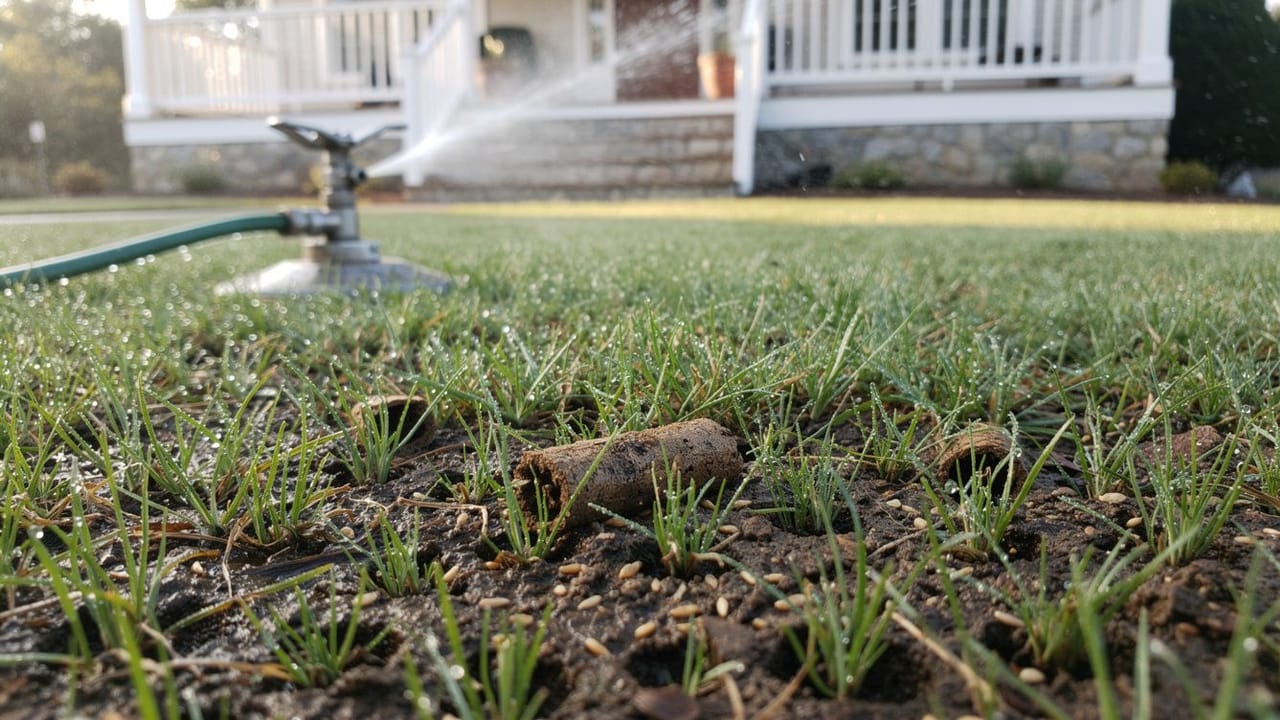
Seed resting on thatch or a layer of clippings has a poor start. NC State calls good soil-to-seed contact paramount to maximize available soil moisture, and it recommends core aerification before seeding to reduce compacted areas. The holes capture seed and hold moisture, which is why the new fescue often comes up as little tufts out of the aeration holes.
We mow the seeding pass a little lower than usual and bag it, so the seed lands on soil rather than on cut grass; that’s our habit, not an extension rule. MU Extension’s cool-season lawn calendar works the same way for a thin lawn: clear the dead material and debris, aerate, then scatter the seed in September and drag or rake it into the loosened surface. Leave herbicides alone too. NC State says fall-seeded cool-season grasses should not have any herbicides applied until the new grass is extensively tillered, and its tall fescue lawn maintenance calendar cautions that some herbicides may affect newly seeded turf, so follow the label. If a pre-emergent went down on your lawn this year, read its label for the reseeding interval before you buy seed.
- Core aerate first, and break up the plugs so the soil goes back into the lawn
- Mow a little low and bag for the seeding pass only
- Starter fertilizer when there’s no soil test to go by
- No herbicide on the seedlings until they have tillered, and check any pre-emergent label for its reseeding interval
- Light watering, several times a day in dry weather, until the seedlings are up
- Then back to deeper, less frequent watering
The first three weeks decide it
NC State’s newest seeding note expects germination in 5 to 10 days with soil moisture and suitable soil temperatures, and its fall seeding note from a year earlier says 10 to 21 days. For that whole stretch the seed can’t be allowed to dry out. The maintenance calendar says to keep the seedbed moist with light watering several times per day and not to let the seedlings dry out, and in a dry spell that means short cycles on the sprinklers through the day. It’s the one time we tell anyone to water shallow and often. Once the seedlings are up and rooting, we move back toward the watering the same calendar gives for an established fescue lawn: about an inch a week, ideally not all at once, with the soil wet 4 to 6 inches down.
Keep traffic off the new seed while it comes in. We ask homeowners to steer the dog, the kids and the route to the trash cans around the seeded areas for those weeks, and we hold off mowing until the new grass has grown past the height it will be cut to, which our post on the first mow after overseeding walks through. NC State also suggests getting seed down before the leaves begin to fall and cover the yard, and our post on leaves on the lawn covers what to do when they land on new grass anyway.
What grass seed is best for overseeding fescue?
Turf-type tall fescue is our default seed for a fescue lawn. NC State’s maintenance calendar calls for a blend of turf-type tall fescue cultivars at 6 pounds of seed per 1,000 square feet, and it describes the improved fescues as more shade tolerant, with a finer leaf, better shoot density and a darker green color than the old standard, Kentucky-31. If you’re still deciding whether fescue is the right grass for your yard at all, our post on bermuda or fescue goes through that choice.
We read the bag before we buy it: the cultivar names, the weed seed and other crop percentages, and the test date. If the seed is coated, NC State’s newest note says to raise the seeding rate to account for the coating percentage, since part of the weight in the bag is coating rather than seed. If you’re weighing yearly programs from a few companies, check whether fall overseeding is in the price or quoted as its own line, and our post on what a lawn care contract should include covers the other terms worth comparing. If you’d rather hand the whole job over, ask us for a free estimate and we’ll put your lawn on the fall seeding schedule.
Sources
- NC State Extension TurfFiles, Seeding Cool-Season Grasses in NC (Grady Miller, 2026) — Piedmont seeding target mid-September to early October; earlier seeding helps where irrigation is available; spring seeding unlikely to give a year-long stand; core aerification before seeding; soil-to-seed contact; germination in 5 to 10 days; no herbicides until extensively tillered; coated seed needs a higher rate; seed before leaves fall
- NC State Extension TurfFiles, Time for Fall Seeding of Tall Fescue (Grady Miller, 2025, updated 2026) — Soil temperatures greater than 60°F and air temperatures of 68 to 77°F for germination; seed out by mid-October; spring-established fescue more susceptible to drought, heat, disease and weeds; aeration holes capture seed and hold moisture; germination in 10 to 21 days
- NC State Extension, AG-367 Tall Fescue Lawn Maintenance Calendar (2021) — Turf-type tall fescue blend at 6 pounds per 1,000 square feet; starter fertilizer without a soil test; light watering several times per day for a seedbed; about an inch a week and 4 to 6 inches deep for an established lawn; some herbicides affect newly seeded turf; aerate clay or high-traffic lawns; one-third mowing rule; improved fescues compared with Kentucky-31
- University of Missouri Extension, G6705 Cool-Season Grasses: Lawn Maintenance Calendar (2025) — Renovating a thin lawn: clear debris, aerate, scatter seed in September and rake it into the loosened surface; overseed thin spots early in March if missed in the fall
FAQ
When to Overseed a Fescue Lawn in Nashville — questions
Can I overseed in spring in Nashville?
You can, but it rarely lasts. NC State Extension says spring-established tall fescue is more susceptible to drought, heat, fungal diseases and weeds, and that spring seeding is not likely to give a year-long stand of healthy tall fescue under normal summer weather. MU Extension’s calendar does allow overseeding thin spots early in March if the fall seeding was missed. For a badly thin lawn, we patch the worst areas early in spring and save the full overseeding for September.
Do I need to aerate before overseeding?
NC State Extension recommends core aeration before seeding to reduce compacted areas, and the holes catch seed and hold moisture, so the new grass often comes up in tufts from the holes. Its tall fescue calendar also says to aerate lawns that get heavy traffic or are grown on clay soils. We aerate before every overseeding we do.
How long before I can mow newly seeded lawn?
Go by height rather than the calendar. Let the new grass grow past your normal mowing height, then bring it back down without cutting off more than a third of its height at once, which is the rule NC State’s tall fescue calendar gives for mowing. We only mow new grass with a sharp blade and on dry ground, so the mower does not pull seedlings out by the root.
When is it too late to overseed?
For fescue around here, after mid-October. NC State Extension says to get seed out by then, because later sowing brings a much higher chance of slow or poor germination, and seed that goes down too cool can leave a thin stand heading into winter. Seeding before the leaves start falling helps as well.