
· by Michael Blair, Nashville's Lawn Care
Lawn care quotes are unusually hard to compare, because two companies can quote the same lawn for very different work and both be describing something reasonable. The place to look is what each one counts as an application and what it treats as extra.
What should a lawn care program spell out?
The number of visits, what happens on each, and roughly when. How many visits a lawn gets depends on how hard it is meant to be kept, and UT’s turfgrass program sorts turf by maintenance intensity: an A Zone turf may be routinely fertilized and aerified or dethatched once each year, with pesticides often applied preventively against weeds, insects and disease, while a B Zone turf may be fertilized no more than two or three times a year and treated on a limited basis as problems occur. A quote should tell you which of those it is pricing.
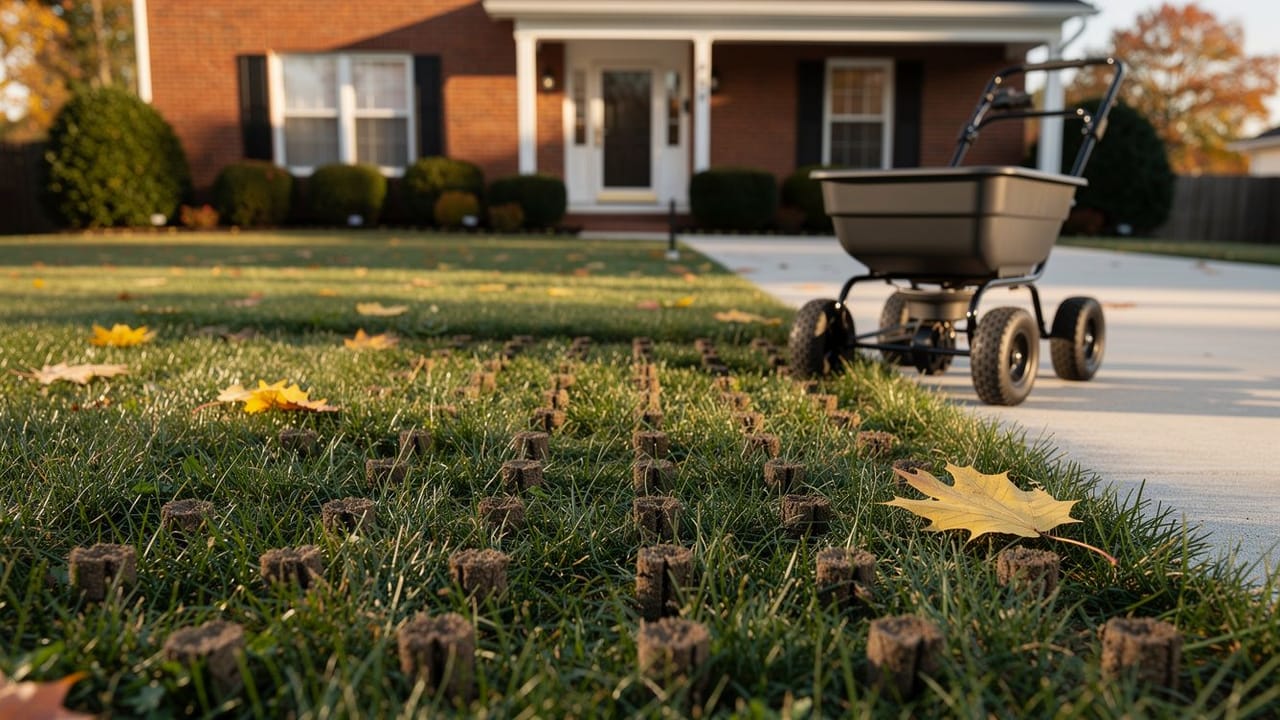
It should also say what isn’t included. Aeration and overseeding are often quoted as their own line items, so check whether a low number leaves them out before you set it beside one that doesn’t. Ask the same of grubs and turf disease: are they part of the program, or treated only after you call? Ours are handled under our grub, disease and pest service, and a quote should say plainly where they fall.
- Visit count and approximate month for each
- What product class goes down on each visit
- Whether aeration and overseeding are included or extra
- Whether grub and disease control are included or by callout
- What a callback costs if a treatment does not take
Terms worth pushing back on
We don’t promise a weed-free lawn, and we’d be wary of a contract that does. What is reasonable to put in writing is control: a defined response if weeds break through between visits, such as a callback within a stated number of days.
Read the renewal and cancellation terms as closely as the visit list. Check whether the agreement renews on its own each year and whether the price can change when it does, and whether cancelling partway through the season means paying back a discount on visits already made. That last clause can make leaving mid-season cost more than it looks.
Where the money actually goes
Product applications are the easy part to line up side by side. The labor is harder to see. On a lawn kept to the A Zone standard, UT’s description has aeration or dethatching coming around once a year, and because that is a crew and a machine on the lawn rather than a bag of product, ask where it sits in each quote and whether the price includes it.
Timing matters as much as the line items. Ask what month the first visit falls in, what goes down on it, and what the company times its pre-emergent by. We time the pre-emergent in our fertilization and weed control program on soil temperature rather than a fixed date, and the fall seeding window has its own write-up in our post on when to overseed.
What should I ask before signing a lawn care contract?
Ask what happens if the lawn does not improve, and listen for whether the answer is a process or a discount. Ask whether the same technician will be on your property each visit, because someone who has walked the lawn four times picks up changes a rotating crew can miss.
Ask for the license, and know what the right one looks like. The Tennessee Department of Agriculture’s page on certification, licensing and charters says any company providing or offering custom pesticide application must hold a pest control charter, one for each business location, and that at least one commercially certified person has to be on site at each application. The department’s advice to homeowners hiring a pesticide company adds that the charter number should be visible on the company vehicle, that you can ask to see the applicator’s certification card, and that you have the right to request the product label and safety data sheet for what is being applied. A salesperson knocking on doors should carry a Solicitor’s card from the department.
A certification card can be checked, too: the department’s page for commercial applicators points to a status lookup that searches by name or TDA number and shows when a certification expires. A company that hesitates over any of this has answered a more useful question. If you already have a quote in hand and want ours priced against the same work, send us the details.
Sources
- University of Tennessee Institute of Agriculture, Turfgrass in Tennessee: About Turfgrass — Turf classified by maintenance intensity; A Zone routinely fertilized and aerified or dethatched once each year with preventive pesticides; B Zone fertilized no more than two or three times a year, pesticides as problems occur
- Tennessee Department of Agriculture, Certification, Licensing and Charters — Custom pesticide application requires a pest control charter, one per location; at least one commercially certified person on site at each application
- Tennessee Department of Agriculture, Pesticide Consumer Tips — Charter number visible on the company vehicle; ask for the applicator’s certification card; right to the product label and safety data sheet; Solicitor’s card
- Tennessee Department of Agriculture, Pesticide Applicators – Commercial (including CEUs) — Commercial certification status lookup by TDA number or name, showing the expiration date
FAQ
What a Lawn Care Contract Should Include — questions
How many lawn treatments does a Nashville lawn need?
It depends on how the lawn is meant to be kept. UT’s turfgrass program describes high-maintenance turf as routinely fertilized and aerified or dethatched once a year, with pesticides often applied preventively, and moderate turf as fertilized no more than two or three times a year and treated as problems come up. Ask each company which of those its visit count is built for, and get the schedule in writing.
Is aeration and overseeding usually included?
Not always, so check. Both are mostly labor rather than product, and a quote may list them as separate line items or leave them out entirely. A program quoted without them is not comparable to one quoted with them, so ask each company to price the same work before comparing totals.
Should I sign an annual contract or pay per visit?
The terms matter more than the format. An annual program puts the timing-sensitive visits on a schedule, and paying per visit can suit someone who does most of the feeding themselves and wants only certain applications. Either way, get the visit schedule in writing, and read how the agreement renews and what cancelling mid-season costs.
Does a lawn care company need a license?
Yes, if it applies pesticides for hire. The Tennessee Department of Agriculture requires a pest control charter for each business location, and at least one commercially certified person on site at every application. The charter number should appear on the company vehicle, and you can ask to see the applicator’s certification card and check its status.