
· by Michael Blair, Nashville's Lawn Care
Middle Tennessee is in the transition zone. UT Extension’s guide to managing lawn weeds in Tennessee places the state between the northern cool-humid and southern warm-humid climates, with some locations favoring warm-season grasses and others cool-season ones. In a Nashville yard that means the cool-season grasses have a hard summer and the warm-season grasses spend the winter dormant. There is no grass that is simply correct here. The choice is which compromise fits your lot, and the deciding factor is usually shade.
What each one actually does here
Tall fescue is the cool-season option. UT’s weed guide says cool-season grasses grow best in spring and fall and hold their color through the winter, and UT Extension’s guide to the fescues notes that fescues in this transition zone often take high-temperature and drought stress during long hot, dry spells in summer. That stress is behind most of what we cover in our post on why lawns here go brown in July. Fescue is also a bunch grass with weak sod-forming habits, so it doesn’t creep sideways to fill a bare spot the way bermuda does.
Bermuda works the other way around. UT’s bermudagrass management calendar gives its best growth at air temperatures of 80 to 95 degrees and says that in Tennessee it is most often dormant in late fall, winter and early spring, and the weed guide notes that warm-season grasses lose their color while they’re dormant. NC State Extension’s bermudagrass lawn calendar says it establishes quickly and recovers rapidly from injury, which is why a bermuda lawn mends its own worn patches. Where it falls down is shade.
Which grass handles shade better, bermuda or fescue?
Bermuda needs full sun. NC State’s calendar says it requires full sunlight, and UT’s weed guide calls it essentially intolerant of shade among the warm-season grasses. A shaded lawn grows weak and thin, and UT explains that the open canopy left behind favors the shade-tolerant weeds that move in. If your lot has a big oak or maple, bermuda under it is a losing project no matter how well the rest of the yard is kept, and our post on bare patches under trees covers what does work in that ground.
Tall fescue copes with more of it, within limits. UT’s fescue guide says it does best in full sun or light, open shade and rates its shade tolerance as intermediate, below the fine fescues; the weed guide adds that tall fescue usually handles heat better than red fescue but takes shade less well. So on a lot with a mix of sun and light shade, we usually put down tall fescue. Where the shade gets heavy, UT’s advice is mulch or a shade-tolerant ground cover instead of more seed. Zoysia is the third grass people ask about: UT says it tolerates light, open shade, though its density and color can drop there, and NC State’s zoysiagrass calendar describes a very dense, wear-resistant lawn that is slow to recover from injury.
How does upkeep differ between bermuda and fescue?
Fescue has to be reseeded now and then, since it won’t fill its own gaps. UT’s fescue guide says broadcasting or slit-seeding every two to three years may be necessary to keep it uniform and dense, with seed going down in late summer, roughly August 20 to September 15. When a lawn comes out of a bad summer thin, we don’t wait for the third year. That early fall window is what our aeration and overseeding is scheduled around. The feeding is heavier than most people expect: UT’s fescue schedule spreads 4 pounds of nitrogen per 1,000 square feet a year over five applications, three of them in September, October and November.
Bermuda skips the reseeding, but it has to be mowed low and often. UT’s weed guide puts common bermuda at 3/4 to 1 1/2 inches, against 2 to 3 inches for tall fescue, and NC State points out that keeping bermuda lower means mowing it more often. It also needs a firm edge, because NC State warns that its stems spread rapidly above and below the ground and can invade flower beds. We run fertilization and weed control on a separate calendar for each grass.
Living with the dormancy either way
The honest question is which off season you mind less. Fescue has its rough stretch in hot, dry summer weather, when you’re outside using the yard. Bermuda sits dormant through late fall, winter and early spring, when you mostly aren’t.
Some homeowners overseed bermuda for winter color. UT’s bermudagrass calendar describes seeding perennial ryegrass into established bermuda in late summer or early fall, and it warns that annual ryegrass has very poor cold hardiness and may thin out in the spring. The same calendar says the ryegrass competes with the bermuda for water, nutrients and light, which often lowers the bermuda’s density and quality the following spring. It can be done, and it is more work than either grass on its own; keep in mind that calendar was written for athletic fields. If you’re thinking about switching grasses, which usually means a renovation or new sod, ask us for a free estimate and we’ll look at where the sun actually falls on your lot.
Sources
- University of Tennessee Extension, PB956 Managing Lawn Weeds: A Guide for Tennessee Homeowners — Tennessee in the transition between cool-humid and warm-humid climates; warm-season grasses lose color in winter dormancy; bermuda essentially intolerant of shade; thin shaded turf invites weeds; tall fescue less shade tolerant than red fescue; zoysia tolerates light, open shade; heavy shade calls for mulch or ground cover; mowing heights
- University of Tennessee Extension, PB1576 Selecting, Establishing & Maintaining the Fescues — Summer heat and drought stress in the transition zone; bunch-type habit; reseeding every two to three years; seeding August 20 to September 15; full sun or light, open shade, intermediate shade tolerance; five-application, 4 lb nitrogen yearly schedule
- University of Tennessee Extension, PB1632 Bermudagrass Athletic Field Management Calendar — Best growth at 80 to 95 degrees; dormant in late fall, winter and early spring in Tennessee; perennial ryegrass overseeding; annual ryegrass poor cold hardiness; ryegrass competition lowers bermuda density the next spring
- NC State Extension, AG-431 Bermudagrass Lawn Maintenance Calendar — Establishes quickly and recovers rapidly from injury; requires full sunlight; lower height means more frequent mowing; stems spread above and below ground and invade flower beds
- NC State Extension, Zoysiagrass Lawn Maintenance Calendar — Very dense, wear-resistant lawn, slow to recover from injury; establishment from plugs typically two to four years
FAQ
Bermuda or Fescue for a Nashville Lawn — questions
What is the best grass for a Nashville lawn?
It depends on the lot. UT Extension’s advice is to choose by exposure, soil and the level of care the lawn will get. For a lot with some light shade we usually recommend turf-type tall fescue, because it handles more shade than bermuda. On a lot in full sun, where you want the grass green through July and don’t mind it dormant from late fall into early spring, bermuda is the better fit.
Can I have both bermuda and fescue?
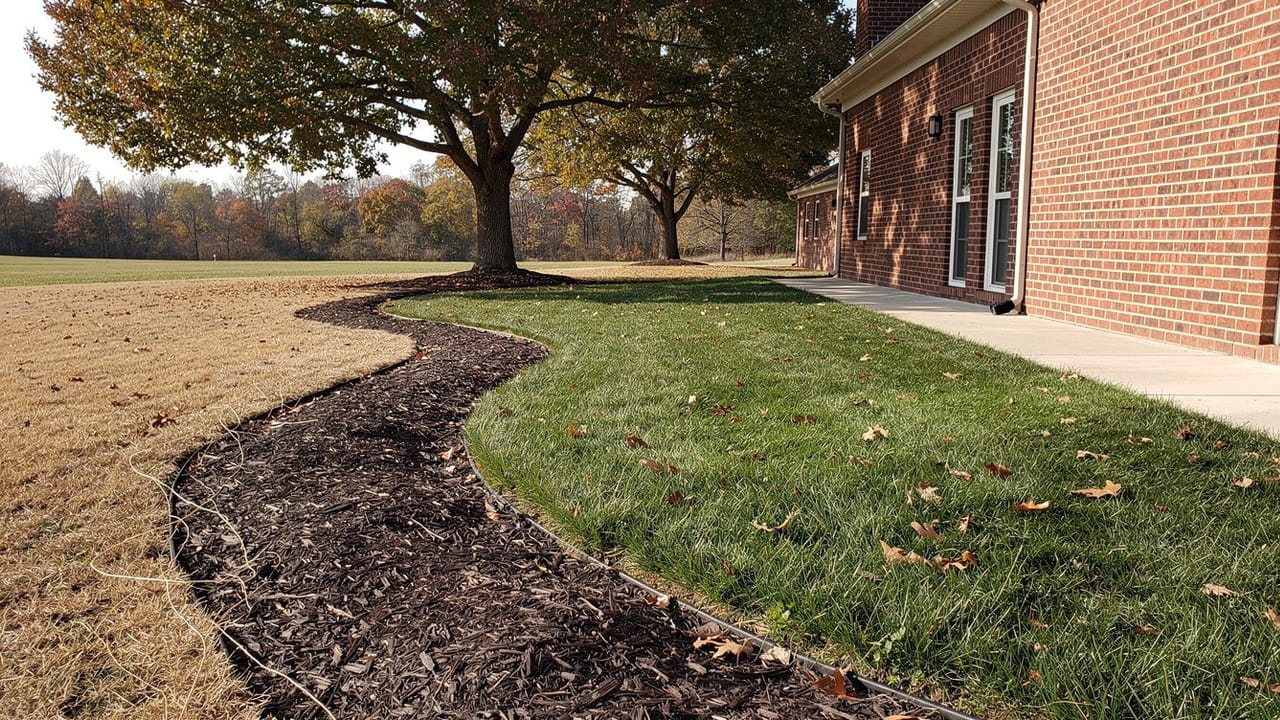
Not in the same area for long. Bermuda spreads by stems above and below the ground and will creep into fescue, especially where the sun is strong. You can keep bermuda in the open areas and fescue under the trees, but plan on edging and watching the boundary every season instead of treating it as settled.
Does zoysia work in Middle Tennessee?
Yes, and it is worth considering. UT Extension says zoysia tolerates light, open shade, which is more than bermuda manages, though its density and color can fade there. It makes a very dense, wear-resistant lawn and goes dormant in winter like bermuda. The catch is establishment: NC State Extension says zoysia planted from plugs typically takes two to four years to fill in.
Is bermuda grass warm season or cool season?
Bermuda is a warm-season grass. UT Extension gives its best growth at air temperatures of 80 to 95 degrees and says that in Tennessee it is usually dormant and brown through late fall, winter and early spring. Tall fescue is the cool-season choice, growing best in spring and fall and keeping its color in winter.